
Gerrymandering in Washington State
Ruling Party Power Grab.
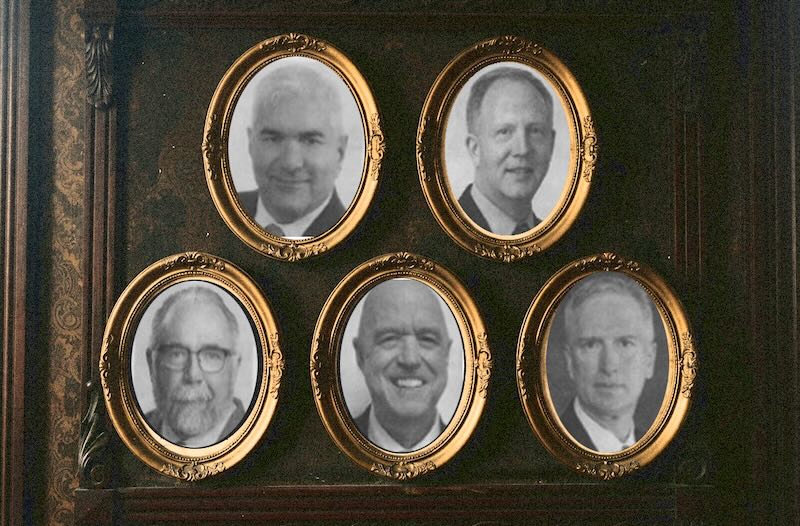
Ruling Party Ol' Switcheroo?
Political Narratives as Folklore,
Independent Expenditure Rules Over the Years.
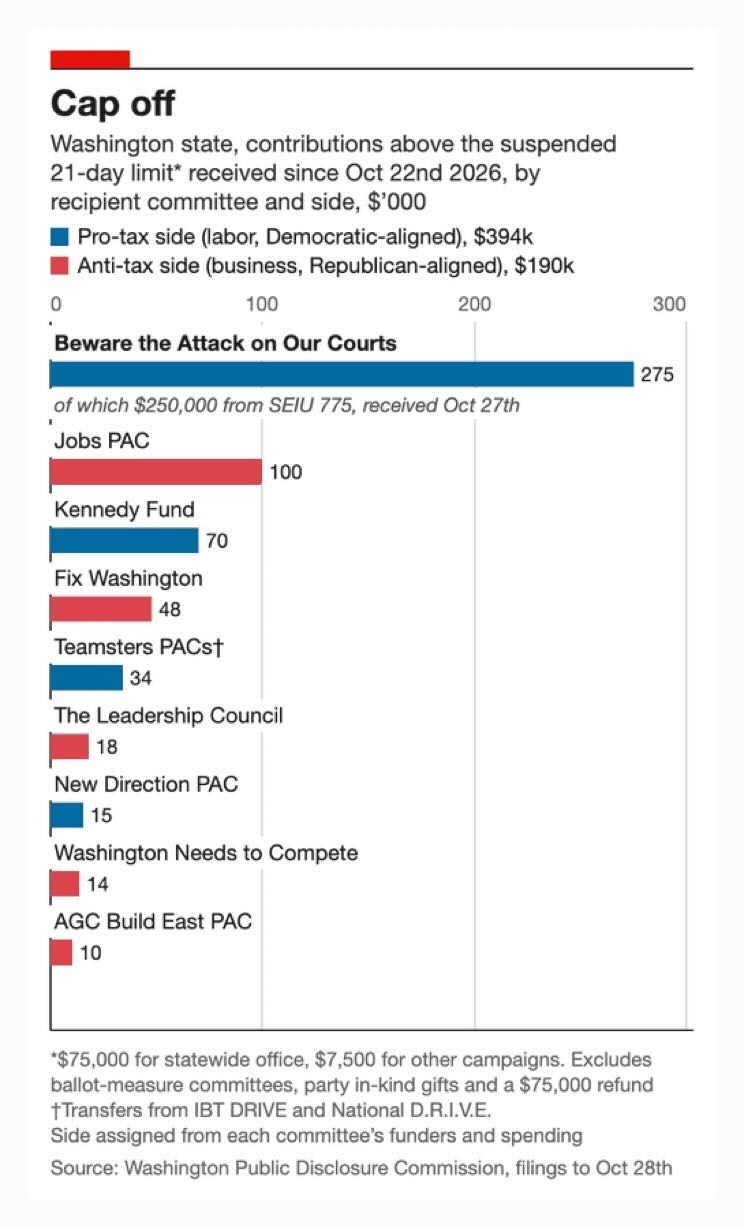
On October 22nd, our state's Public Disclosure Commission (PDC) lifted a proscription on political campaigns accepting contributions from any single person exceeding $75,000 for statewide campaigns and $7,500 for local campaigns or political committees (PACs) within 21 days of a general election.
The PDC said this was in recognition of significant concerns regarding enforceability of RCW 29B.40.070 as raised by US Supreme Court and other federal court authority.
The PDC may be on firm legal grounds, however the timing of their decision — 12 days before the voting period ends — is terrible.
This last-minute decision, on a significant campaign finance rule, looks like an insider plot by a decadent ruling party — but I don’t have any evidence other than the optics of Democratic Party patrons SEIU 775 conveniently dumping the most money into a PAC targetting state supreme court races in the final days of the election period.
Lifting contribution limits appears partisan because PDC commissioners are all Democratic Party appointees. For a comparison, the Federal Election Commission holds a balance from both dinosaur parties.
Temporality
It’s fair to give the PDC grief on this decision because their “significant concerns” regard legal rulings from 1976 and 2010, respectively. Decades have passed for the PDC to consider suspending enforcement of contribution rules. Why wait until 12 days before the end of this year’s voting period?
This is not only stinky, it goes against a major Democratic Party political narrative which has reached the level of folklore.
How did we get to resent citizens uniting?
To Be, or Not to Be — an IE
On January 30, 1976 the Supreme Court of the United States (SCOTUS) ruled unanimously in Buckley v. Valeo that, among other campaign finance issues, independent expenditure (IE) limits were unconstitutional restraints on speech. The legal standard was quid quo pro corruption — if an expenditure were independent, it could not garner any favor from a candidate elected lawmaker.
From 2003 until 2010, SCOTUS then held a different precedent for IEs.
McConnell v. F.E.C., challenged provisions in 2002’s McCain-Feingold Act. McConnell upheld the Act's campaign spending proscriptions for corporations and labor unions within a period before an election.
The new legal precedent was undue influence. The McConnell majority ruled the quid pro quo standard as too narrow, reasoning that substantial donations gain access or ingratiate lawmakers — hence the influence.
Few know that, due to McCain-Feingold, documentary filmmaker Michael Moore had to ask the F.E.C. permission to show his film Fahrenheit 911 during the 2004 election season. The commission dismissed the complaint against Moore’s corporation which produced the partisan documentary, ruling the film statement as entertainment.
In 2008, another partisan film documentary, promoted by the political group Citizens United, challenged the same laws protected by McConnell.
In January of 2010, Citizens United v. F.E.C. reversed the undue influence legal regime for a return to Buckley’s quid pro quo framework. The SCOTUS majority said that government cannot favor certain speakers in elections.
Corporations and unions got their voices back — and used them.
A Legend is Born
The political folklore is how Citizens United is responsible for so-called Dark Money.
This is not true.
In the 2010 decision, SCOTUS rejected plaintiff group Citizens United’s plea to strike down disclosure laws.
Buckley upheld that disclosure is in the public’s interest. The Citizens United ruling followed that course of law, stating disclosure of campaign finances, “insure that the voters are fully informed about the person or group who is speaking”.
Citizens United plead that disclosure could cause a chilling effect on political donors. SCOTUS smacked down that argument, stating the group had never submitted evidence of any donor being harassed.
The Citizens United ruling actually stands as precedent for campaign finance disclosure. Nevertheless, we hear the rumor and gossip — over an over — about how Citizens United is responsible for Dark Money.
Smokescreen
If it were the opponents of our state's ruling party who switched campaign finance rules at the last minute to flood spending into the election, we’d see Democratic leadership press conferences — along with indignant selfie videos — galore. This would fit perfectly with their camp’s narratives about Citizens United, oligarchs, the trillionaire, billionaires, millionaires and other villains they push.
The resentment serves as a smokescreen for the dinosaurs who sell access to the halls of government. Insiders get cover for not passing disclosure laws which would address the problem of Dark Money.
Laws mandating real transparency in federal election ads are sorely needed. Congress could pass legislation next session mirroring Washington State’s model campaign finance rules which disclose the Top 5 donors within election media.
Democratic leadership are silent about the recent rule change in our state — and we never hear anythng about federal campaign finance reform other than cheap rhetoric. See why it’s reasonable to claim the new rules are a conspiracy?
We’ll see next week, but there’s no accountability and the ruling party seems to get away with virtually anything in our state.
New Legislation Needed
The last-minute rule change impacts five state supreme court races. Democratic Party Patrons, campaigning under the ironically named PAC Beware the Attack on our Courts, are using the last-minute rule change to attack judicial candidates who will not serve their special interest agenda.
We need to consider how individual campaign contribution limits create incentives for soft-money conduits like the ironically named PAC above. Allowing unlimited contributions into campaign committees — but with new disclosure rules — would at least help candidates themselves to fight back against the attacks from special interests dominating Olympia.
New rules could require candidates to disclose their Top 10 Contributors on the front page of their campaign sites. This kind of disclosure over who is supporting a candidate will tell voters what they need to know about the campaign's political views and agenda.
Considering how the current rules benefit insider groups over individual campaigns, citizens should unite around an effort for new campaign finance rules in our state and for federal races.