WA Legislator Questioned After Her Non-Profit Employer Benefits From Bill She Wrote.
Rep. Tarra Simmons Ethics Board Hearing Summons.
Rep. Tarra Simmons, a Democratic lawmaker representing North Kitsap County and a leading advocate for criminal justice reform, is facing scrutiny from the state Legislative Ethics Board over allegations that her relationships with publicly funded nonprofit organizations crossed ethical lines. At the center of the case are millions of taxpayer dollars, bitter feelings and questions about how influence operates behind the scenes in Olympia.
Washington state Rep. Tarra Simmons rose to national prominence as the first formerly incarcerated person elected to the Washington Legislature. Simmons became a leading voice in criminal justice reform.
Rep. Simmons is in Democratic Party leadership and represents the 23rd district in North Kitsap County, including Bremerton, Poulsbo and Bainbridge Island.
Rep. Simmons is now in trouble.
In October 2025, the Washington Legislative Ethics Board found reasonable cause to pursue allegations against Simmons regarding disputes over nonprofit funding, legislative influence and personal relationships. In January 2026, the board scheduled a rare public hearing for June 8–9 to determine whether she improperly used her legislative position in matters connected to nonprofit organizations she worked closely with, receiving public funding.
In May, Simmons sought dismissal of the complaint, but the Legislative Ethics Board denied the request and allowed the case to proceed to the scheduled public hearing.
Simmons and her attorney have denied wrongdoing, arguing the ethics investigation is politically motivated and driven by personal and political conflicts surrounding the nonprofit partnerships involved in the case.
Fellow Travelers
The complaint was brought by Kim Gordon, who is identified in the ethics-board order as an employee and board member of the American Equity & Justice Group (AEJG), a Washington nonprofit involved in sentencing reform and incarcerated reentry advocacy.
Anthony Powers, AEJG’s executive director, is central to the records and later filed a separate complaint that was dismissed in May.
According to the AEJG website, Powers “was incarcerated at age 16 and sentenced to 77 years in prison, but obtained early release due to changes in the law and his strong record of rehabilitation.”
The ethics-board records describe years of collaboration between Simmons and Powers before the relationship deteriorated during disputes surrounding a sentencing-data dashboard project funded through provisos Simmons sponsored in 2023 and 2024.
The provisos directed approximately $2.6 million over two budget cycles toward the dashboard and related criminal justice data work involving AEJG and partner organizations, according to legislative records and the ethics-board order.
Ethics-board filings state Rep. Simmons met a man identified in the order by the fictitious name Jerry Stone* at a conference in New Orleans and later encouraged AEJG to hire him, despite the organization initially lacking funding for the position.
The records say Simmons later denied Stone was her boyfriend despite an earlier Facebook post in which she wrote, “He’s had my heart since the moment I met him at a conference in New Orleans.”
The filings also state Simmons offered $10,000 in leftover campaign funds after AEJG said it lacked money for planning work.
Stone was later hired by AEJG. Simmons has denied the contribution was tied to Stone’s hiring.
According to the filings, Simmons attended several internal AEJG meetings in February 2024 while Stone was also present.
The records state AEJG’s board later concluded the relationship between Simmons and Stone presented a conflict of interest and voted to return Simmons’ $10,000 campaign contribution, along with a separate $40,000 project payment.
The disputed payments became part of the broader conflict surrounding the sentencing-data dashboard project.
The project was later highlighted by Microsoft on its Garage “Wall of Fame.” State materials hosted at waforall.wa.gov , an Office of Equity collaborative site, described the effort as a transparency project designed to organize Washington felony sentencing data into searchable public databases.
Direct Pipeline
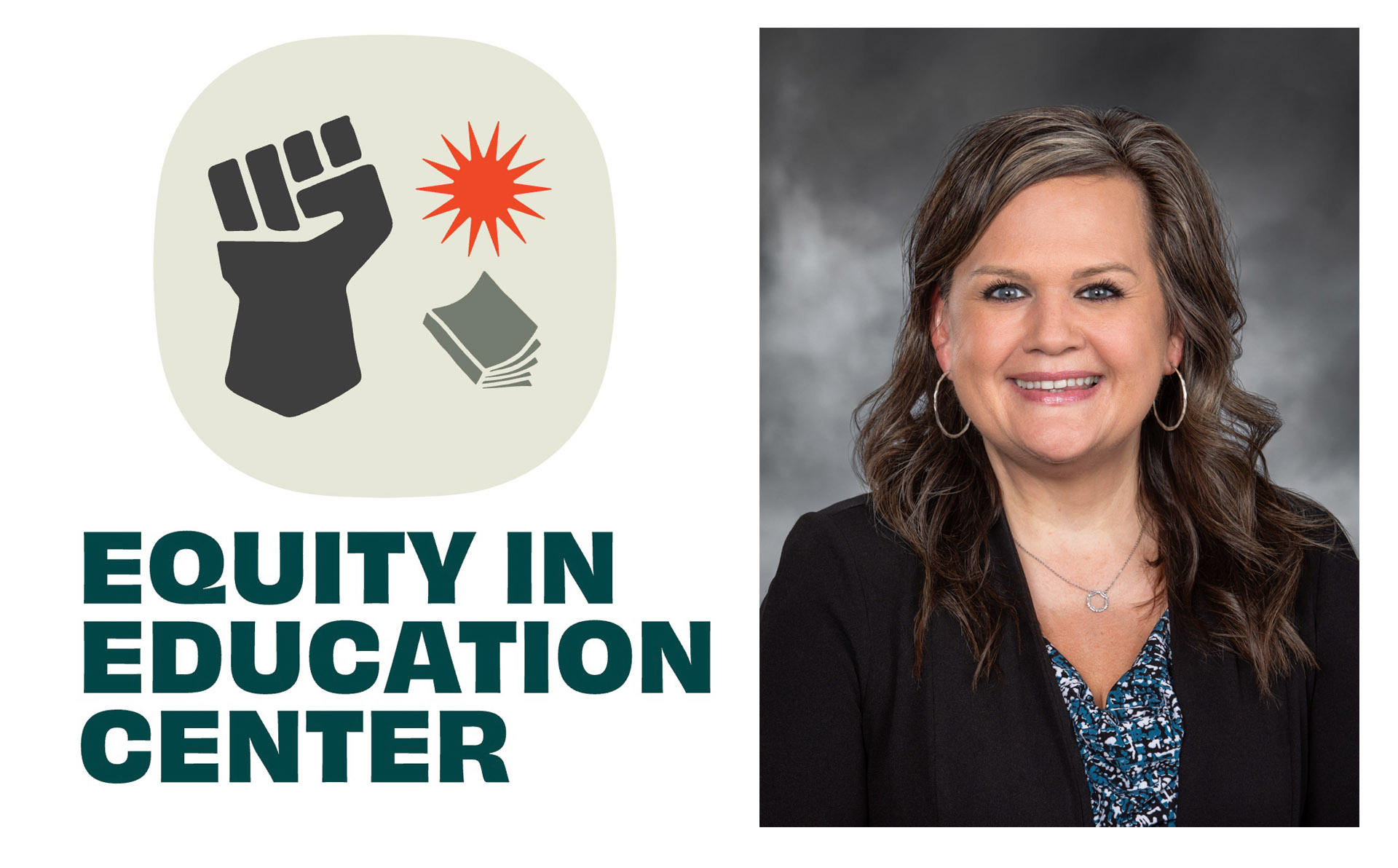
At the same time the dashboard project was being funded, Simmons was also working for the Equity in Education Center (formerly the Equity in Education Coalition, or EEC), serving as the organization’s part-time Director of Strategy from December 2023 through January 2025.
During part of that period, Simmons was simultaneously serving in the Legislature while participating in discussions involving proviso language connected to organizations named in the project funding.
State budget provisos sponsored by Simmons ultimately provided funding for the dashboard project across two budget cycles.
The 2024 supplemental budget alone routed $2.35 million through the Administrative Office of the Courts, including $1.35 million for fiscal year 2024 and another $1 million for fiscal year 2025.
The proviso language described the recipients generically as equity and justice nonprofits working with a nonprofit focused on “equity in technology and education.” But ethics-board records and internal emails cited in the order suggest the funding structure was designed specifically around AEJG and the Equity in Education Coalition.
In one email quoted in the order, Administrative Office of the Courts official Chris Stanley wrote that “given your desire for AEJG to work with EEC,” he recommended tightening the language, “to ensure that they are the only ones doing the work of the proviso.”
In practical terms, the discussion centered on crafting the budget language so AEJG and EEC would remain the main organizations carrying out the project.
The ethics-board findings state AEJG representatives later told the Administrative Office of the Courts that their understanding of what the proviso required was based on discussions with Simmons before she sought the budget language.
The findings also state that Stanley said Simmons privately discussed her legislative intent for the proviso with him during a phone conversation and indicated the intent matched the role EEC described itself as performing under the project.
The findings also describe a discussion about how Simmons’ salary was being funded while she worked for EEC. According to the order, when an EEC official said Simmons’ pay was coming from a savings account rather than the subcontract account tied to the dashboard work, Simmons responded that the organization did not need to separate the accounts.
Loose Money / Bitter Feelings
As the project continued, disputes emerged over payments, subcontract work and whether portions of the work had actually been completed.
According to the ethics-board order, AEJG later raised concerns that the Equity in Education Center had billed for work, “but not actually doing the work.”
One email included in the filings instructed AEJG to withhold payment until proof of “substantive work” was provided.
In another response quoted in the ethics-board findings, Administrative Office of the Courts official Chris Stanley described the billing concerns as “appalling” and warned EEC was “treading dangerously close, if not already there, to ‘breach of contract’ territory.” Stanley also noted the agency reserved the right to seek repayment of funds already distributed.
The Equity in Education Center had also become a significant recipient of state funding through Washington’s digital equity programs.
According to the Washington State Department of Commerce, the organization received a $10,223,042 grant in September 2023 for digital navigation services, devices, hotlines and digital literacy training. Commerce records also show an additional $2.4 million award in December 2021 connected to the statewide ConnectWA Coalition digital navigation program.
A later Washington State Auditor’s Office review of the Commerce program found that the majority of the more than $10.7 million paid to EEC during the audit period “did not have sufficient documentation to determine whether the grant expenditures were allowable.”
According to KUOW, State Auditor’s Office investigators identified clearly unallowable expenses including first-class flights and an open bar at a resort.
The filings also reveal bitter text messages from Simmons to Powers after the ethics complaint was filed.
“I will be very hesitant to help you in the future,” Simmons wrote in one message included in the records. “I did a lot for YOU primarily… then AEJG secondarily.”
The records paint a picture of overlapping relationships between lawmakers, advocacy nonprofits and publicly funded policy work, raising broader questions about transparency, accountability and oversight of taxpayer-funded programs in Olympia.
The allegations remain unresolved pending the outcome of the ethics hearing.
* [The pseudonym comes from the Ethics Board's own practice: they pseudonymize private individuals who appear in the facts but aren't parties to the proceeding or state officials. “Stone” isn't charged, isn't a public official and has no ethics jurisdiction attached. He's a third party whose name happens to be in the underlying facts of someone else's complaint. That's why the footnote on page 2 of the order flags "Jerry Stone" as a fictitious name.]
MORE SUMMIT